


In This Article:
Toggle
Independent doesn’t mean the middle. It means thinking for yourself.
Independent Florida is built around a simple idea: your vote and your political opinions should belong to you, not a party. The ideas below challenge some of the assumptions that keep us choosing between options we say we don’t want—and explore how we can disagree with each other without surrendering our own judgment.
You don’t have to agree with all of them. That’s kind of the point.
The Ideas Behind Independent Florida

The Lesser Evil
Voting for the Lesser of Two Evils
Is voting against the candidate you fear most really the practical choice—or part of what keeps producing choices you don’t want?

Another Choice
Why Vote Third Party?
A candidate doesn’t have to win for a vote to have meaning. So what can an independent or third-party vote actually accomplish?

Should You Stay Home
Not Voting: Is This a Good Option?
Not voting can feel like rejecting the system. But does your absence communicate what you intended?

VOTER RESPONSIBILITY
We Deserve What We Get
You only control one vote. If you’re frustrated with the choices we’re making, start with the choice that’s actually yours.
Better Political Conversations

Tips for conservatives
Conservatives: How to Talk to Liberals
If you want liberals to hear your argument, start by making your actual position clear, finding common ground, and explaining what you’re for—not just what you’re against.

Tips for Liberals
Liberals: How to Talk to Conservatives
If you want conservatives to hear your argument, don’t assume you already know what they believe. Find common ground, listen to their actual position, and show how your ideas work in the real world.

BETTER CONVERSATIONS
You Don’t Have to Change Someone’s Mind
A good political conversation doesn’t have to change someone’s mind today. Sometimes moving them one step—or giving them something to think about is still a win.
BETTER CONVERSATIONS
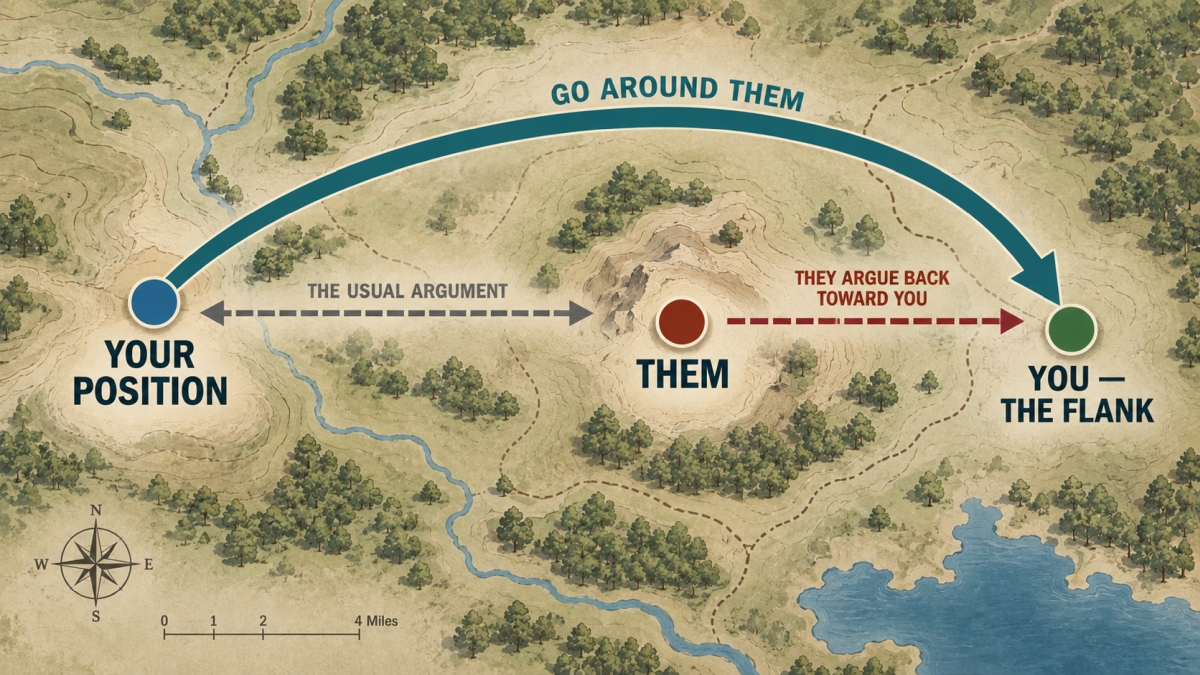
Flank the Argument for a Real Conversation
When a political argument falls into the same tired script, don’t attack the position from the direction they expect. Go around it, get to the other side, and make them argue back toward you.