
In This Article:
Toggle
How many times have you heard someone complain that Republicans and Democrats have given us two terrible choices?
Maybe you’ve said it yourself. You don’t like either party. You don’t particularly like either candidate. You’re frustrated that this enormous country somehow keeps ending up with two choices you don’t want, and you wish someone would give you another option.
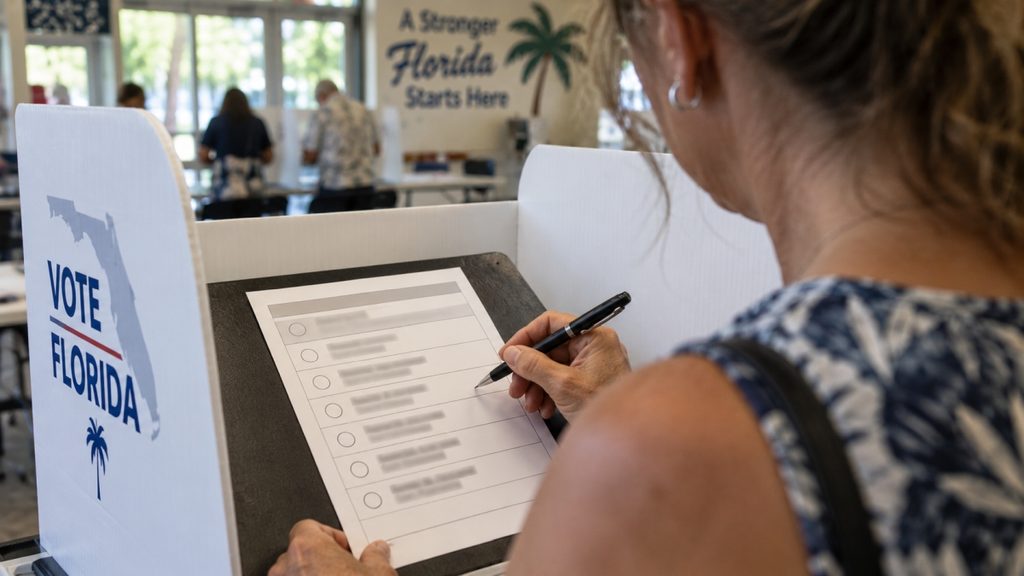
Then Election Day comes. You walk into the voting booth convinced you have two choices. But when you look at the ballot, there aren’t two names. There are three or four. Sometimes there are more.
You may think the others can’t win. You may think the system is stacked against them. You may be certain almost everyone else is going to vote Republican or Democrat.
So you sign your name next to the Republican or Democrat too. You can’t escape that part. That’s a choice you are making.
We can’t keep voting for the political system we say we hate and then act as though somebody else did this to us.
Independent Florida Quick Take
You only control one vote. You don’t control what millions of other voters do with theirs, but neither do they control what you do with yours. If you’re dissatisfied with the two major parties and other choices are on your ballot, decide whose name you’re willing to sign your name next to. Then own that decision.
You Control One Vote
You don’t control how your neighbor votes. You don’t control how someone in another state votes. You certainly don’t control the millions of strangers who will walk into voting booths across the country and make the same decision you’re making.
You may have a pretty good idea what they’re going to do. History, polling, party loyalty and common sense may all tell you that most of them will choose a Republican or Democrat. But think about what is actually happening on Election Day.
There isn’t some separate thing called “the election result” sitting out there waiting for you. Millions of individual people are looking down at their own ballots. Each sees the choices in front of them. Each makes one decision.
Then we add them up—that’s the result.
So when you look at a third-party candidate and think, They aren’t going to win, you’re making a prediction about what millions of other people are going to do with their votes. Maybe you’re right. It doesn’t change the number of votes you control.
One.
The question in front of you is still the same: Whose name are you willing to sign your name next to?
Everyone Else Is Looking at a Ballot Too
This is what bothers me about the way we talk about third-party candidates. We talk about “the voters” as though they’re some separate force that has already made its decision. Everyone is going to vote Republican or Democrat, therefore you have to vote Republican or Democrat too.
But who exactly is “everyone”?
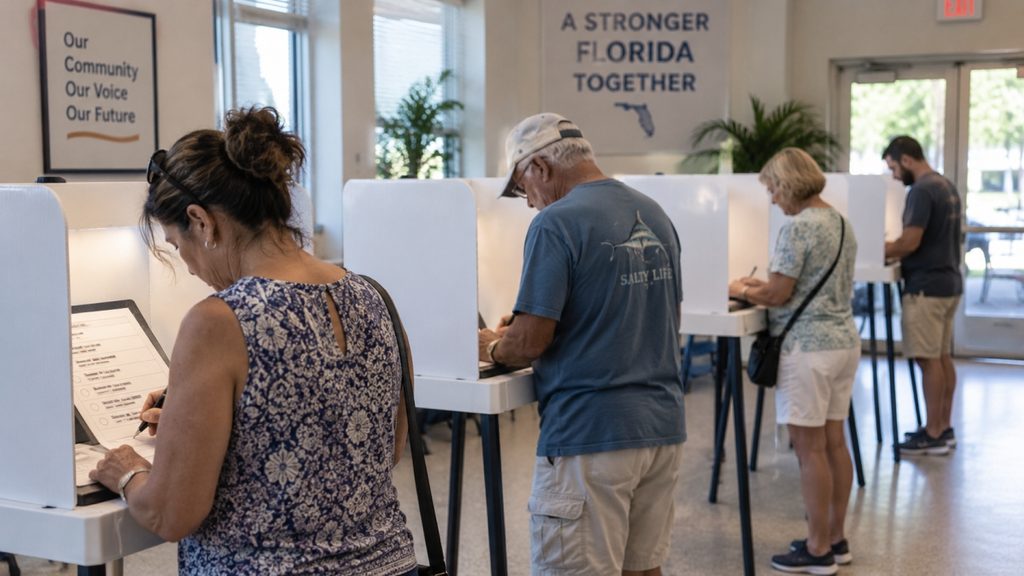
They’re people doing exactly what you’re doing. They’re staring at three, four, five or seven choices and deciding which one gets their vote. Maybe they’re looking at a third-party candidate they prefer and thinking exactly what you’re thinking: I’d vote for that person, but everyone else is going to vote Republican or Democrat.
So they sign their name next to the Republican or Democrat. And so do you. Then we count the votes and discover that almost everyone voted Republican or Democrat.
What exactly did we expect?
You didn’t control any of those other decisions. You couldn’t make those voters choose differently. If they wanted to keep supporting the two major parties, that was their decision to make.
But their decision wasn’t yours.
If you believe both major parties have failed you, and there are other choices on your ballot, why should your prediction about millions of other people’s decisions determine your own?
You have one vote. What are you going to do with it?
Look at the Ballot That’s Actually in Front of You
Florida’s 2024 presidential election makes the point unusually easy to see. There weren’t two named presidential tickets on the ballot. There were seven named party tickets to choose from: Donald Trump, Kamala Harris, Chase Oliver, Claudia De la Cruz, Randall Terry, Peter Sonski and Jill Stein.
If you were deeply dissatisfied with both major parties, there were still five other names staring back at you.
Maybe you thought they had no realistic path to victory. Maybe you thought voting for one of them wouldn’t change who became president. Maybe you were right—they’re still on the ballot.
That’s why saying “I only had two choices” bothers me so much.
No, you didn’t. You decided only two of your choices were worth considering because only two of them could win.
That’s a decision you’re allowed to make. It’s your vote. But call it what it is.
You had other choices and chose not to use them.
My Vote Isn’t a Prediction
I’ve usually voted Libertarian in presidential elections. In 2024, I didn’t. I voted for Jill Stein.
That certainly wasn’t because Jill Stein suddenly represented my political beliefs. On plenty of issues, she’s close to the opposite of what I believe. But I also didn’t think she was going to become president.
By 2024, I didn’t think the Libertarian Party was particularly serious about actually winning anything. The other alternative parties on my ballot were even smaller. Of the choices available to me, I thought the Green Party was doing the best job at that moment of mounting a meaningful challenge to Republicans and Democrats.
So that’s where I put my vote.
Jill Stein received 43,155 votes in Florida, about 0.4% of the total. Donald Trump received more than 6.1 million and Kamala Harris more than 4.6 million. Those numbers are part of the same official Florida election results.
Society made a very different decision from mine. So be it. I didn’t control those other votes. I did my part with the one vote I had.
That’s all any of us can do.
We’ve already talked about why a vote can matter even when the candidate probably won’t win in Why Vote Third Party?, and why fear of the other major-party candidate doesn’t automatically erase your own minimum standard in Lesser of Two Evils. This isn’t another argument about those questions. It’s about what you do once the ballot is actually in front of you.
That’s What YOU Chose
Now go back to the voter who says they’re fed up with the two-party system. You complain about Republicans and Democrats. You tell me neither party represents you anymore. You complain about the candidates they keep giving us. You say this country desperately needs another choice.
Election Day comes. You look down at the ballot. The other choices are sitting right there in front of you.
You may dismiss them because they can’t win. You may be terrified of what happens if the other major-party candidate becomes president. You may decide this election is simply too important to vote any other way.
And then you sign your name next to the Republican, or you sign your name next to the Democrat.
That’s what YOU chose.
You can explain the decision. You can defend it. You can tell me exactly why you thought it was necessary. But don’t tell me you didn’t have a choice.
You did.
You looked at the choices in front of you and made a decision about what to do with your one vote.
Own it.
That’s What WE Chose
Now multiply that moment by millions. One person looks at the ballot and makes a choice. Then another does it. Then another. Republicans do it. Democrats do it. Independents do it. People who love their choices do it, and people who complain endlessly about their choices do it.
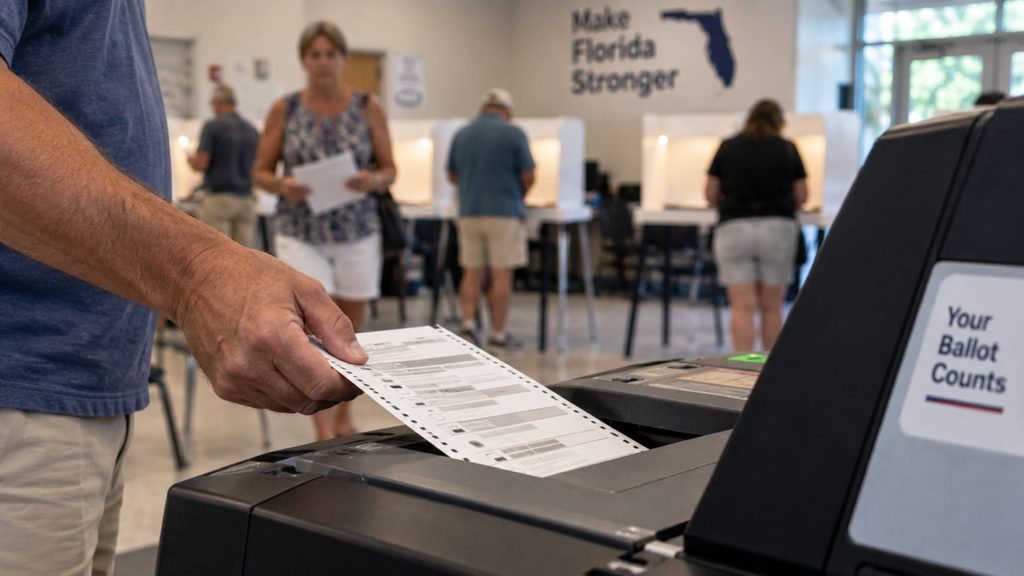
Eventually the polls close, then we count. Suddenly all those individual choices have a new name: the election result. In Florida in 2024, Trump and Harris together received more than 99% of the presidential vote. The five other named tickets together received less than 1%.
That result wasn’t created by some mysterious creature called “the two-party system” walking into the voting booth after everyone else left.
People created it—millions of individual voters who looked at seven named choices and overwhelmingly signed their names next to the Republican or Democrat. That’s what they chose.
And those of us who chose differently don’t get to overrule them. We made our case, cast our votes, and lost. That’s part of living in a society where other people have exactly the same agency we do.
We all live with the result.
We Deserve What We Get
That’s what I mean when I say society deserves what it gets.
You don’t have to like what everyone else chooses. You don’t have to agree with it. You can spend the next four years trying to persuade people to make a different choice next time. But you only get to control your part.
If you used your vote in a way that honestly reflected what you wanted from the choices available to you, you did your part. The rest belongs to everyone else.
But if you spend years complaining about the two major parties, insist that America desperately needs another choice, and then keep signing your name next to one of those two parties because you’re convinced everyone else will do the same, you don’t get to pretend you were merely a victim of the result.
You participated in creating it.
Stop asking what millions of strangers are going to do before deciding what you should do. Look at the ballot in front of you. Look at the choices you actually have. Decide whose name you’re willing to sign your name next to.
Then own it.
Everyone else gets to do the same thing. And when we’re finished, we’ll add up those millions of individual decisions and live with what we collectively chose.
Society deserves what it gets.
 | Reviewed & Approved by Greg Martin Greg is a longtime Florida voter registered with no party affiliation who has been questioning America's political choices since the 2008 election. He created Independent Florida to examine political choices from a voter's perspective, challenge conventional assumptions about voting and party loyalty, and explore ideas that could give voters better options. |
Last Reviewed: September 2026